
 forgemania61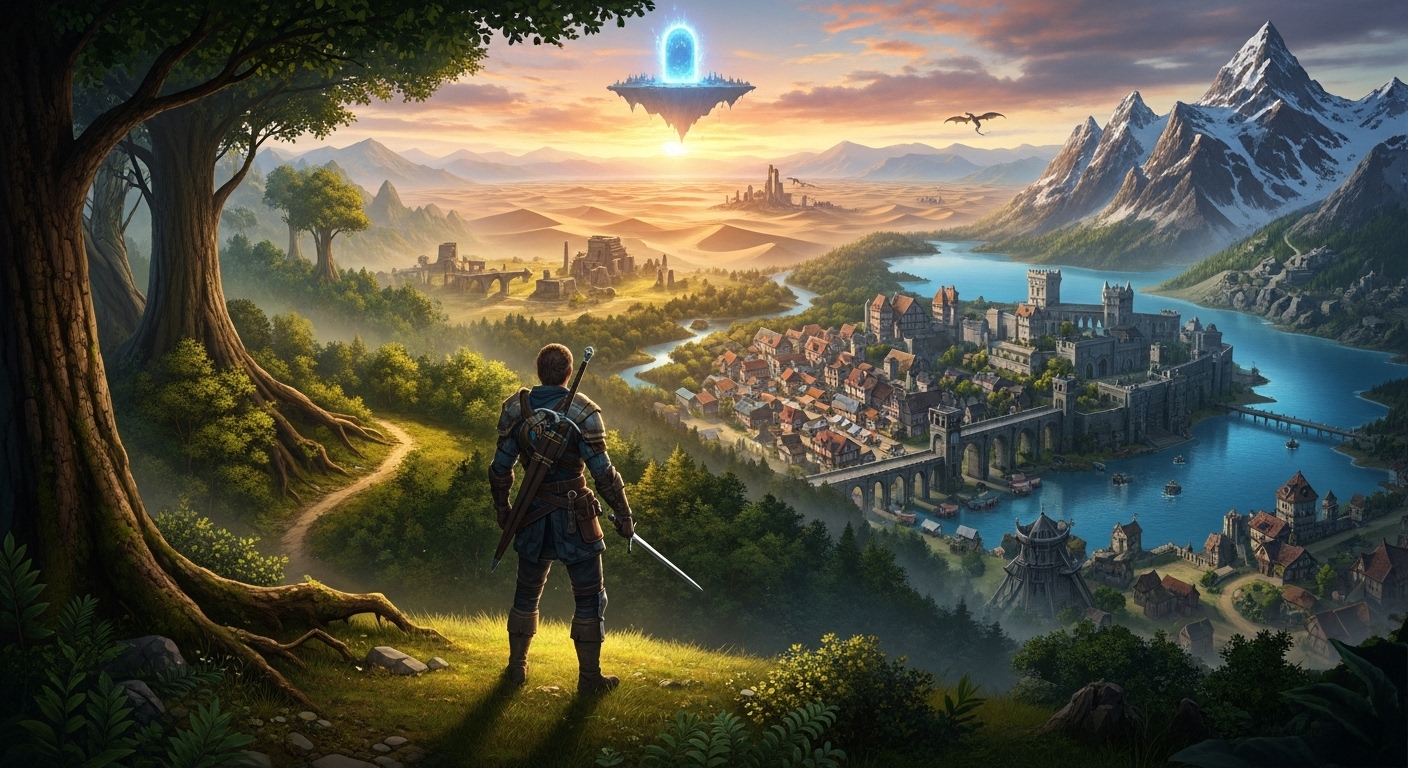
Introduction
Role-playing games (RPGs) have always had a special place in gaming history, offering players the chance to step into immersive worlds, make meaningful choices, and live through characters’ stories. But the rise of the open-world RPG has taken this experience to an entirely new level. Unlike traditional RPGs with linear paths, open-world RPGs give players freedom to explore, experiment, and decide their own destinies. From fantasy kingdoms to post-apocalyptic wastelands, these games provide worlds so detailed and dynamic that they feel alive. In this review of the best open-world RPGs, we will explore not only their gameplay mechanics but also what makes them stand out as benchmarks in the genre.
The Rise of Open-World RPGs
Open-world RPGs combine the depth of role-playing systems with the freedom of sandbox exploration. Early RPGs focused heavily on statistics and turn-based combat, but the evolution of hardware and storytelling expanded their scope. Developers began crafting massive, persistent worlds filled with side quests, secrets, and branching narratives. Titles like The Elder Scrolls series or Fallout changed expectations, showing that players did not just want to play through a story—they wanted to live in the world. The success of these games proved that open-world RPGs could cater to hardcore fans as well as casual players seeking adventure.
The Elder Scrolls V: Skyrim – A Living Fantasy World
Few open-world RPGs have captured players’ imaginations like The Elder Scrolls V: Skyrim. Released in 2011, Skyrim became a cultural phenomenon, praised for its vast landscapes, dynamic quests, and freedom of choice. From climbing snow-covered mountains to joining guilds, players could tailor their experiences however they pleased. The game allowed for deep role-playing, whether one wanted to be a noble warrior, stealthy assassin, or powerful mage. Skyrim’s modding community also kept it relevant for over a decade, proving its influence. Its ability to provide a sense of immersion and replayability makes it one of the greatest open-world RPGs ever created.
The Witcher 3: Wild Hunt – Storytelling Masterpiece
The Witcher 3: Wild Hunt redefined storytelling in open-world RPGs. Released in 2015, it brought to life the adventures of Geralt of Rivia, a monster hunter navigating political intrigue and personal dilemmas. What set it apart was not only its main story but the quality of its side quests, many of which were as compelling as the central narrative. The game’s world felt alive, with weather systems, dynamic NPCs, and moral choices that carried real weight. Its expansions added even more depth, cementing it as a modern masterpiece. Few games manage to blend narrative richness with open-world freedom as successfully as The Witcher 3.
Fallout: New Vegas – Choice and Consequence
Among post-apocalyptic RPGs, Fallout: New Vegas stands out as a shining example of player agency. Released in 2010, it placed players in the Mojave Wasteland, a region filled with factions competing for control. Unlike many games that present simple good-versus-evil choices, New Vegas offered shades of gray, with multiple factions and outcomes that depended heavily on player decisions. Its branching narrative, combined with RPG mechanics and exploration, made every playthrough unique. Fallout: New Vegas demonstrated how player choice could fundamentally alter the experience, making it a landmark in open-world RPG design.
Red Dead Redemption 2 – A Cinematic Open World
Although often considered an action-adventure game, Red Dead Redemption 2 incorporates deep RPG elements that qualify it as one of the best open-world RPG experiences. Released in 2018, it offers a massive recreation of the American frontier, complete with dynamic wildlife, NPC interactions, and a world that reacts to player choices. Players take on the role of Arthur Morgan, whose story unfolds with depth and emotional resonance. Beyond the narrative, the world’s attention to detail—from hunting systems to random encounters—elevates immersion. Red Dead Redemption 2 is both a technical marvel and a storytelling triumph that sets a high standard for future open-world RPGs.
Horizon Zero Dawn – A Unique Blend of Sci-Fi and Fantasy
Horizon Zero Dawn introduced players to a post-apocalyptic world filled with robotic creatures roaming lush landscapes. Released in 2017, it combined RPG mechanics with exploration, crafting, and combat against unique enemies. The story of Aloy’s search for identity was engaging, while the open-world design encouraged discovery and experimentation. Horizon stood out for its originality, offering a world that was both futuristic and primal. Its blend of narrative, exploration, and action set it apart as a standout RPG that challenged traditional genre boundaries.
Dragon Age: Inquisition – Choices That Shape Worlds
Dragon Age: Inquisition took Bioware’s expertise in narrative-driven RPGs and expanded it into an open-world format. Released in 2014, it allowed players to lead the Inquisition, shaping political alliances and waging war against dark forces. What made it memorable was the level of choice it gave players—not just in dialogue, but in shaping entire regions of the world. Exploration, crafting, and party-based mechanics blended with a narrative rich in character development. While not without flaws, Dragon Age: Inquisition showcased how storytelling could thrive in an open-world RPG setting.
Cyberpunk 2077 – A Flawed but Ambitious Vision
Cyberpunk 2077 had one of the most controversial launches in gaming history, but with updates and improvements, it has evolved into a notable open-world RPG. Released in 2020, it placed players in Night City, a neon-drenched metropolis filled with gangs, corporations, and morally complex choices. The game offered deep customization, branching narratives, and immersive world-building. Though technical issues overshadowed its release, Cyberpunk’s ambition cannot be denied. Its blend of futuristic setting, character-driven storytelling, and open-world freedom has since earned it recognition as a strong RPG experience.
Assassin’s Creed Odyssey – Blending History and RPG Mechanics
The Assassin’s Creed franchise has always been known for historical settings, but Assassin’s Creed Odyssey in 2018 embraced RPG elements fully. Set in Ancient Greece, it gave players choice-driven dialogue, branching storylines, and character customization. Unlike earlier titles in the series, Odyssey leaned into exploration, side quests, and leveling systems, transforming Assassin’s Creed into an open-world RPG. It struck a balance between historical immersion and player-driven narrative, making it a significant entry in the genre.
Mass Effect Series – A Blend of Sci-Fi and Role-Playing
Although the Mass Effect series is often categorized as a hybrid between RPG and shooter, its open-world elements, especially in Mass Effect: Andromeda, deserve recognition. The trilogy focused on building relationships, making choices with long-term consequences, and exploring vast galactic landscapes. Mass Effect’s blend of RPG mechanics with cinematic storytelling created one of the most beloved franchises in gaming history. While Andromeda faced criticism, the original trilogy remains a gold standard for how sci-fi RPGs can balance character-driven drama with expansive exploration.
Kingdom Come: Deliverance – Realism in Role-Playing
Released in 2018, Kingdom Come: Deliverance offered a different take on open-world RPGs by focusing on realism. Set in medieval Bohemia, it emphasized historically accurate combat, survival mechanics, and grounded storytelling. Instead of dragons or magic, the game presented the struggles of an ordinary man caught in political turmoil. Its dedication to authenticity, from armor mechanics to hunger systems, set it apart from other fantasy-heavy RPGs. For players seeking immersion rooted in realism, Kingdom Come offered a unique and challenging experience.
The Legend of Zelda: Breath of the Wild – Redefining Exploration
While traditionally an action-adventure series, The Legend of Zelda: Breath of the Wild blurred the lines between genres with its RPG elements. Released in 2017, it emphasized open exploration, survival mechanics, and player creativity. The game encouraged experimentation with physics, cooking, and combat strategies, offering unparalleled freedom. Its minimal hand-holding approach redefined how players approached open worlds. Breath of the Wild inspired countless developers and raised the bar for what open-world design could achieve, making it a cornerstone in modern gaming.
Gothic and Its Cult Following
The Gothic series may not have achieved the mainstream recognition of titles like Skyrim or The Witcher, but it holds a special place among open-world RPG fans. Known for its challenging mechanics, complex NPC interactions, and immersive worlds, Gothic pushed boundaries in terms of player choice and consequence. Its unforgiving nature and attention to detail gave it a loyal fanbase, and its influence can be seen in later European RPGs. Gothic remains a testament to how innovation often comes from unexpected places.
Baldur’s Gate 3 – A Modern Masterpiece
Baldur’s Gate 3, though rooted in Dungeons and Dragons mechanics, has embraced modern open-world RPG sensibilities. Released in 2023, it combines turn-based combat with expansive exploration, branching dialogue, and an intricate narrative. The game allows players unparalleled freedom in shaping their journey, whether through alliances, moral decisions, or creative problem-solving. Baldur’s Gate 3 proves that even classic RPG systems can thrive in an open-world format, offering a rich blend of tradition and innovation.
Why Open-World RPGs Resonate with Players
Open-world RPGs resonate deeply with players because they allow freedom, creativity, and personal expression. Unlike linear games that tell one story, these titles give players the power to create their own adventures. The ability to choose paths, influence worlds, and shape characters creates a sense of ownership. They also foster immersion, making players feel like part of the worlds they inhabit. Whether slaying dragons, negotiating with factions, or simply wandering through forests, the sense of possibility keeps players engaged for hundreds of hours.
Challenges in Creating Open-World RPGs
Creating successful open-world RPGs is not without challenges. Developers must balance vast worlds with meaningful content, avoiding the pitfall of repetitive tasks. Technical limitations can also hinder immersion, as seen in games that launch with bugs or performance issues. Narrative design is another challenge, as open-ended freedom can sometimes dilute storytelling focus. Despite these hurdles, the best open-world RPGs manage to strike a balance, offering both freedom and direction.
The Future of Open-World RPGs
The future of open-world RPGs looks brighter than ever. With advances in artificial intelligence, cloud gaming, and virtual reality, upcoming titles are poised to push immersion even further. AI-driven NPCs could create more dynamic worlds, while VR could make exploration even more personal. Procedural generation and evolving narratives may also redefine how players experience role-playing in vast open worlds. Given how far the genre has come, the future promises even more groundbreaking adventures.
Conclusion
The best open-world RPGs reviewed here highlight the diversity and innovation within the genre. From the high fantasy of Skyrim to the post-apocalyptic Mojave of Fallout: New Vegas, from the futuristic sprawl of Night City in Cyberpunk 2077 to the detailed realism of Kingdom Come: Deliverance, these games offer something for every type of player. They redefine what it means to role-play, not just by telling stories, but by letting players live them. Open-world RPGs have proven to be more than a genre; they are experiences that blend imagination, immersion, and freedom into unforgettable adventures. As technology evolves, so too will the worlds we inhabit, ensuring that the future of open-world RPGs remains as exciting as the past and present.